Why Men Google Their Symptoms at 11pm
Men are not researching their health online because they prefer screens. The 2026 evidence points at social disconnection — and it explains why so much men's health information is written to sell rather than to help.
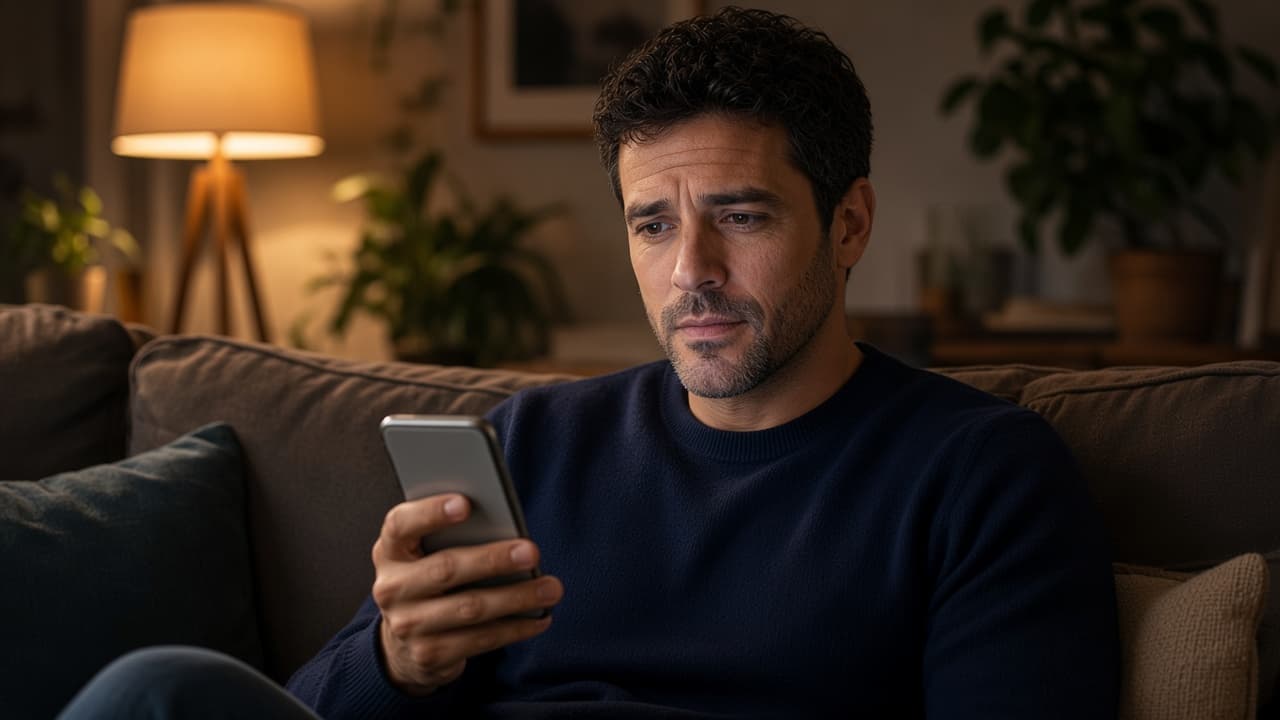
If you found this site, there is a reasonable chance you found it late at night, on a phone, after typing something you would not say out loud. That is the single most common way men arrive at health information about anything below the waist.
It is worth understanding why, because the reason is not the one usually given — and it determines how much of what you find you should trust.
The lazy explanation
The standard story is that men prefer screens. They would rather type than talk, avoid doctors out of stubbornness, and treat search engines as a way of skipping an uncomfortable conversation.
The Global Wellness Institute's 2026 men's wellbeing trends pushed back on exactly this, and the framing is the most useful thing in the report: social disconnection, not digital preference, is driving men online for health support. Men are not choosing the internet over a conversation. For a lot of men there is no conversation available to choose against.
The numbers behind that
The supporting data is fairly stark, and it is specifically about who men can talk to.
Research from the American Institute for Boys and Men finds that around 21% of men report receiving emotional support from a friend in a given week, against roughly 41% of women, and that about 74% of men would turn first to a spouse or partner when they need help rather than to a friend or relative. The share of men under 30 reporting no close friends has risen dramatically since the early 1990s.
Set that next to the health-seeking data. Cleveland Clinic's men's health survey found 65% of men avoid seeking medical attention for as long as possible, and — in a later wave of the same research — that men largely say they do not trust online health advice while a substantial share act on it anyway.
Put those together and you get the actual mechanism. A man notices something. There is no friend he would raise it with, the GP feels disproportionate for something small, and the partner conversation is the one he is most keen to avoid because it concerns exactly the part of life he does not want to discuss there. So it goes into a search box, at night, alone. Not because that is his preference. Because it is the only remaining option.
Why this matters for what you read
Here is the practical consequence, and it is the reason this article exists on a site that sells something.
An audience that is isolated, embarrassed, and searching at 11pm is the most commercially valuable audience in health. They are highly motivated, they are unlikely to seek a second opinion, they will not ask a friend whether the thing they bought worked, and they will not complain publicly if it did not. That combination is why so much men's health content — particularly around prostates, testosterone, and anything urinary — reads the way it does: long, alarming, and terminating in a monthly subscription.
So a few things worth applying to anything you read on this subject, including this page.
Check whether it tells you when to stop reading and see someone. Content designed to sell you something avoids sending you to a clinician, because the clinician might solve the problem for free. Content designed to inform you does it in every article.
Check for a sources list with real institutions in it. Not "studies show". Named guidance, named journals, links you can open.
Be suspicious of anything that promises to cure, fix or eliminate. Careful sources use "may help" and "some men find", because that is what the evidence supports. See what the evidence actually says about prostate supplements for what happens when you check the claims.
Notice whether the anxiety is doing work. If the first six paragraphs are about what your symptom might mean and none of them are about how common it is, that is a sales technique.
The reassurance most men are actually looking for
The specific thing a lot of these late-night searches are looking for is not a treatment. It is permission to stop worrying.
For the subject of this site, that permission is reasonably well supported. A few drops appearing after you finish urinating is extremely common — one study of over 2,000 men aged 40 to 91 found 51% reported it — and it has been argued in the literature that it should be regarded as a normal consequence of male anatomy rather than a disease. The full picture is in what post-micturition dribble is, and the mechanics in why drops come out after peeing.
That is not the same as "never worth mentioning to anyone". It is the difference between a plumbing quirk and a symptom, and knowing which one you have is the entire point of working out what to tell a doctor.
The part that is not solvable with better search results
The disconnection underneath all this is a real problem and a search engine is a poor substitute for it.
The 2026 trend reports are notably interested in one intervention here: sport as structured social infrastructure rather than recreation. The UK's approach in early 2026 treated organised team sport as a route to men's wellbeing specifically because it produces regular, low-stakes, side-by-side contact with other men without requiring anyone to schedule a conversation about their feelings. It works because it is not framed as therapy.
Whatever the vehicle — five-a-side, a running club, a shed, a shift at a food bank — the health value of having two or three men you see every week and could mention something to is larger than anything on this website. It is also the intervention least likely to be recommended by anyone selling you a supplement.
When to close the tab
If what you are searching at 11pm involves blood in the urine, inability to pass urine, fever alongside urinary symptoms, severe pain, unexplained weight loss, or a symptom that has been clearly getting worse over weeks, stop reading and book an appointment. No article is the right tool for those, including a good one.
And if you are searching at 11pm because you feel hopeless rather than curious, that is worth saying out loud to someone tonight — a crisis line counts, and it is the right call.
Our disclaimer sets out the limits of what this site is for.
Sources
- Men's Wellbeing Initiative Trends for 2026 — Global Wellness Institute
- Male loneliness and isolation: what the data shows — American Institute for Boys and Men
- Cleveland Clinic MENtion It survey: men will do almost anything to avoid going to the doctor
- Prevalence and risk factors of postmicturition dribble — Urological Science