What the Pelvic Floor Actually Does for Men
A plain-language introduction to the pelvic floor muscles, the part they play in finishing urination cleanly, and a cautious note on training them properly.
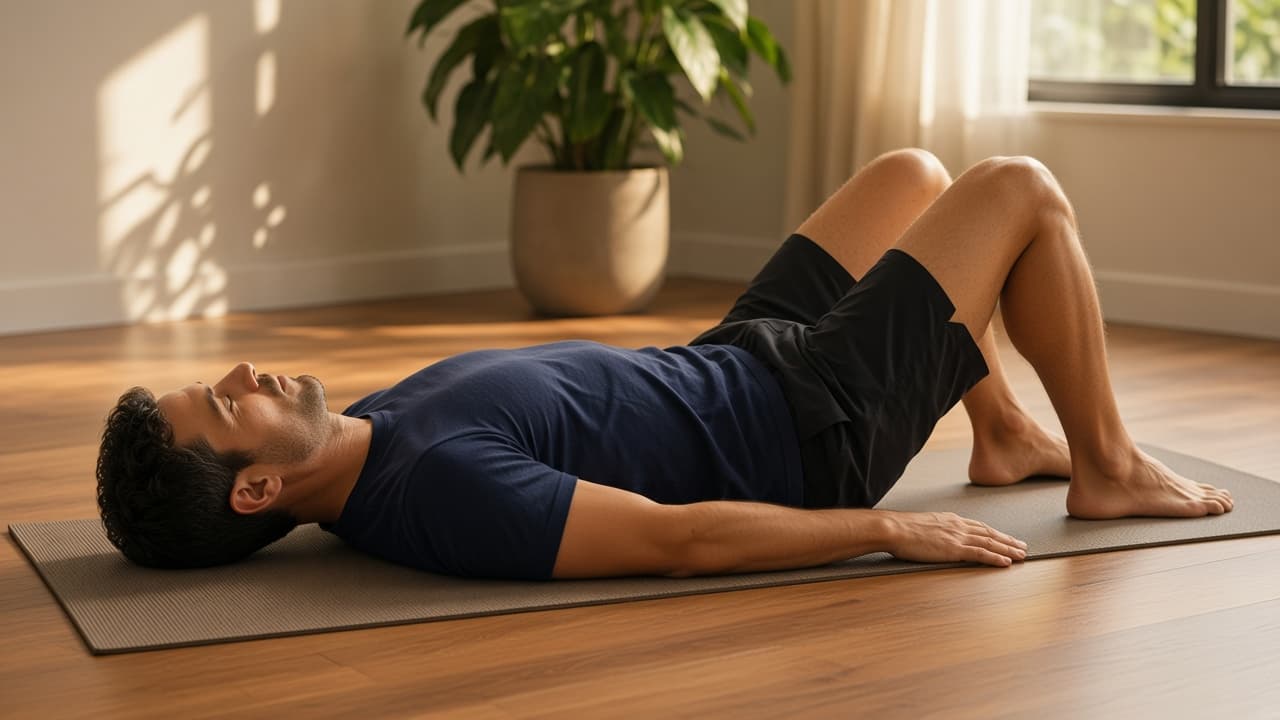
Most men first hear the phrase "pelvic floor" in the context of pregnancy and assume it does not apply to them. It does. You have one, it works constantly, and it has a direct part in how cleanly you finish urinating.
This article is general educational information, not medical advice. Pelvic floor training is best learned from a physiotherapist who specialises in pelvic health, particularly if you have symptoms.
What it is
The pelvic floor is a layer of muscle slung across the base of the pelvis, like a hammock running from the pubic bone at the front to the tailbone at the back. The urethra passes through it.
Those muscles are doing quiet work all day: supporting the organs above them, contributing to continence, and contracting and relaxing as you urinate.
The part that matters here
One specific muscle group — the bulbospongiosus, sitting around the bulb of the urethra — contracts rhythmically at the end of urinating. Its job, in effect, is to help clear the urethra of whatever is left.
That is the same curved stretch discussed in why drops come out after peeing. Your body already has a mechanism for the problem. It is just not always thorough, particularly if you finish in a hurry or the muscles are not especially well-conditioned.
Finding them
You do not need a training programme to benefit from simply knowing where these muscles are and how to engage them deliberately.
The usual way to locate them: the muscles you would use to briefly stop the flow mid-stream, or to lift the base of the penis slightly without moving your legs or buttocks. You should feel a gentle inward-and-upward lift at the base of the pelvis. If your stomach, thighs, or buttocks are clenching, that is the wrong thing.
A caution: use the stop-the-flow trick once, to identify the muscles, and then stop. Repeatedly interrupting urination as a routine exercise is not generally recommended. Practise the contraction when you are not urinating.
About training them
Pelvic floor exercises for men are well documented and are used clinically, particularly after prostate surgery. This site is not the right place to prescribe a programme, for two reasons: the right dose depends on your situation, and doing them incorrectly — usually by bracing the abdomen instead — is common and unhelpful.
If you want to pursue it properly, ask your GP for a referral to a pelvic health physiotherapist. A single session to check your technique is worth more than months of guessing from a website.
Where this fits with the technique
Muscle conditioning is a slow lever: weeks to months, if it helps at all in your case. The technique in our guide is a fast one: it works mechanically, from the outside, in a couple of seconds, and it does not depend on how strong those muscles are.
They are not alternatives. Knowing how to engage the pelvic floor deliberately makes the technique slightly more effective, because you can add a gentle contraction at the end of the sweep.
When to get help rather than exercise
Speak to a clinician rather than starting exercises on your own if you have pain, blood in the urine, worsening leakage, difficulty starting or stopping your stream, or any change following surgery in the area. See dribbling vs. incontinence for where the line sits.